
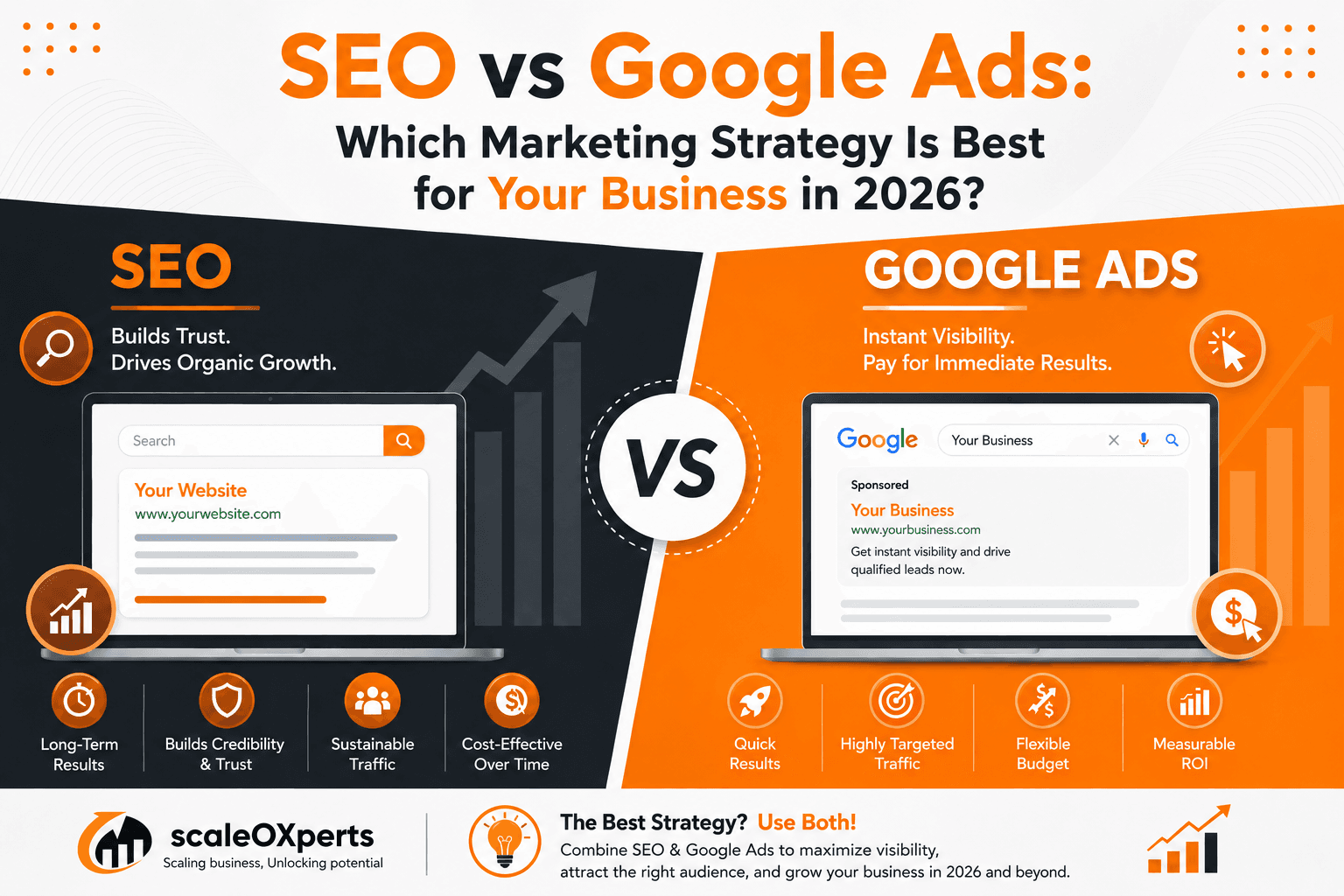
If you want to grow your business on the internet you will always wonder about something. That something is SEO versus Google Ads. Which one should you put your money into? The answer is not simple. You cannot just pick one over the other. Both SEO and Google Ads help businesses show up in search results. They help you get customers and make money.. They do it in very different ways.
SEO is about making your website show up better in search results that are not paid for. On the hand Google Ads lets you pay to be at the top of search engine results right away. You need to know the difference between paying for ads and getting traffic to your website. This is important if you want to make decisions, about marketing your business.
Some recent studies show that businesses are still putting money into both SEO and Google Ads. One study looked at 2.3 million keywords. It found out that 38 percent of advertisers also show up in search results without paying for it. This means that successful businesses are using both SEO services and Google Ads together. They are not treating them like they are competing with each other.
Let us look at both SEO and Google Ads in detail.
Understanding SEO and Google Ads
What is SEO?
Search engine optimization or SEO is the process of making your website better so that it shows up naturally in search engine results without paying for every person who visits. This includes finding the words, creating content. making sure the website works well, getting other websites to link to yours, making the pages load faster and making sure people have a good experience when they visit.
Unlike paying for ads, SEO is something you do for the term. It usually takes months to see results but once your website is doing well it can keep bringing in people who are looking for what you have with very little extra cost.
One of the things about SEO is that people trust it. A lot of people click on the results because they think they are more real, than ads. As your website becomes well known it gets easier to show up for more words, which helps you save money when you want to get new customers.
What are Google Ads?
Google Ads is the platform that Google uses for advertising where you pay for each click. Companies choose the keywords they want to advertise for and when people search for those keywords their ads show up near the top or bottom of the search results.
Google Ads is different from searching for something and getting results naturally. With Google Ads you can get people to visit your website fast as soon as you start your ad campaign. You get to decide how much money you want to spend each day, who you want to show your ads to, what kind of devices you want to show them on, where you want to show them and even what time of day you want your ads to appear.
The bad thing about Google Ads is that when you stop paying for them people stop coming to your website. Also a lot of companies are using Google Ads now so it costs more to advertise and you have to be really careful about how you set up your ads so you can get the most out of them.
SEO vs Google Ads: Key Differences
Cost Comparison
SEO costs for content generation, technical setup, ongoing maintenance and more. But it costs less on a per- visitor basis because you get organic visitors over time without paying per visitor.
Whereas the cost-per-click (CPC) of Google Ads adds up with every visit. If you compete in high-value industries like finance, legal services, insurance, software or B2B solutions, be prepared for very high CPC and closely monitor what’s working.
Speed of Results
This is where PPC wins.
Once a google ad campaign is set up, it could generate leads within hours. Great for those new products or seasonal offers that need leads in a flash.
Organic SEO takes time!
Search engines need a bit of time to crawl, index and reward your content in the search engine.
Traffic Quality
One key point when talking about paid vs organic traffic is search intent. Organic traffic is typically produced from users actively researching products or services, seeking how-to information, and comparing products. Traffic generated through an organic channel typically shows increased engagement on-page and higher on-site duration.
Users who come through a paid source are typically more transactional as advertising is usually triggered on terms like “buy”, “hire” or “near me”.
This makes paid traffic, via PPC, perfect for e-commerce or for generating leads.
Long-Term ROI
As a method for building up the sort of traffic that is sustainable over the long time, SEO will most likely pay off more. Once you optimize an article, landing page, or backlink, the strength of your site builds. Eventually, you start ranking for not hundreds but thousands of keywords.
Google ads constantly needs money to bringing traffic. Companies often depend on PPC to generate sales today, while they invest in the long-term value of SEO.
PPC vs SEO: Pros and Cons
Benefits of SEO
SEO offers several long-term advantages:
- Builds brand authority
- Generates sustainable traffic
- Lowers customer acquisition cost over time
- Improves website quality
- Creates lasting digital assets
SEO also plays an important role in every part of your sales funnels - whether it’s from your informative blogs, comparison tables of products or your individual product or service pages.
Benefits of PPC
Google Ads wins when speed matters.
Advantages include:
- Instant visibility
- Precise audience targeting
- Budget control
- Easy performance measurement
- Excellent for promotions and launches
New offers can be rapidly tested, landing pages, new prices, new keywords, all without having to wait to see what SEO content has done.
Challenges of SEO
Patience is necessary for SEO.
Rankings are impacted by algorithm changes, growing competition, technological problems, and the caliber of the content. Before SEO has a chance to develop, companies that anticipate instant success frequently give up.
AI-powered search experiences, which can respond to some informational questions directly within search results and decrease clicks for specific content kinds, provide another new difficulty.
Challenges of PPC
You cannot “set and forget” your PPC campaigns. If you don’t have a solid strategy behind your keywords, bidding methods, negative keyword management, and landing page experience, your ad spend can be burned without generating a return.
Plus, as you attract more competitors, your average CPC can quickly inflate, making efficiency even more critical.
Paid vs Organic Traffic
Which Converts Better?
There is no single clear winner.
Ads that target users with purchase intent through paid keywords convert very fast. Customers obtained organically build stronger loyalty with your business in the long term, by searching for their problem’s solution and landing on your website organically.
The brands that have presence on both channels tend to obtain higher overall conversion rates as users are able to be targeted at different stages of the customer journey and various touchpoints, helping them to finally convert.
Which Builds Brand Trust?
Natural rankings create higher trust and credibility.
Organic users understand that search engines want their content and not for paid reasons, whereas pay-per-click ads offer the best in increased brand visibility and is critical for brand’s operating in super-competitive industries that can be a struggle to attain ranking.
Smart companies utilize both.
When Should You Choose SEO?
SEO is the better choice if:
- You want long-term business growth.
- Your budget is limited.
- You publish valuable content regularly.
- You want lower acquisition costs over time.
- Brand authority is important.
SEO works especially well for educational websites, B2B companies, SaaS businesses, healthcare providers, and service-based businesses.
When Should You Choose Google Ads?
Google Ads is ideal when:
- You need leads immediately.
- You're launching a new product.
- You're running seasonal campaigns.
- You want measurable short-term ROI.
- You have sufficient advertising budget.
For ecommerce stores, local businesses, and emergency services, PPC often delivers immediate revenue opportunities.
Why Combining SEO and PPC Delivers the Best Results
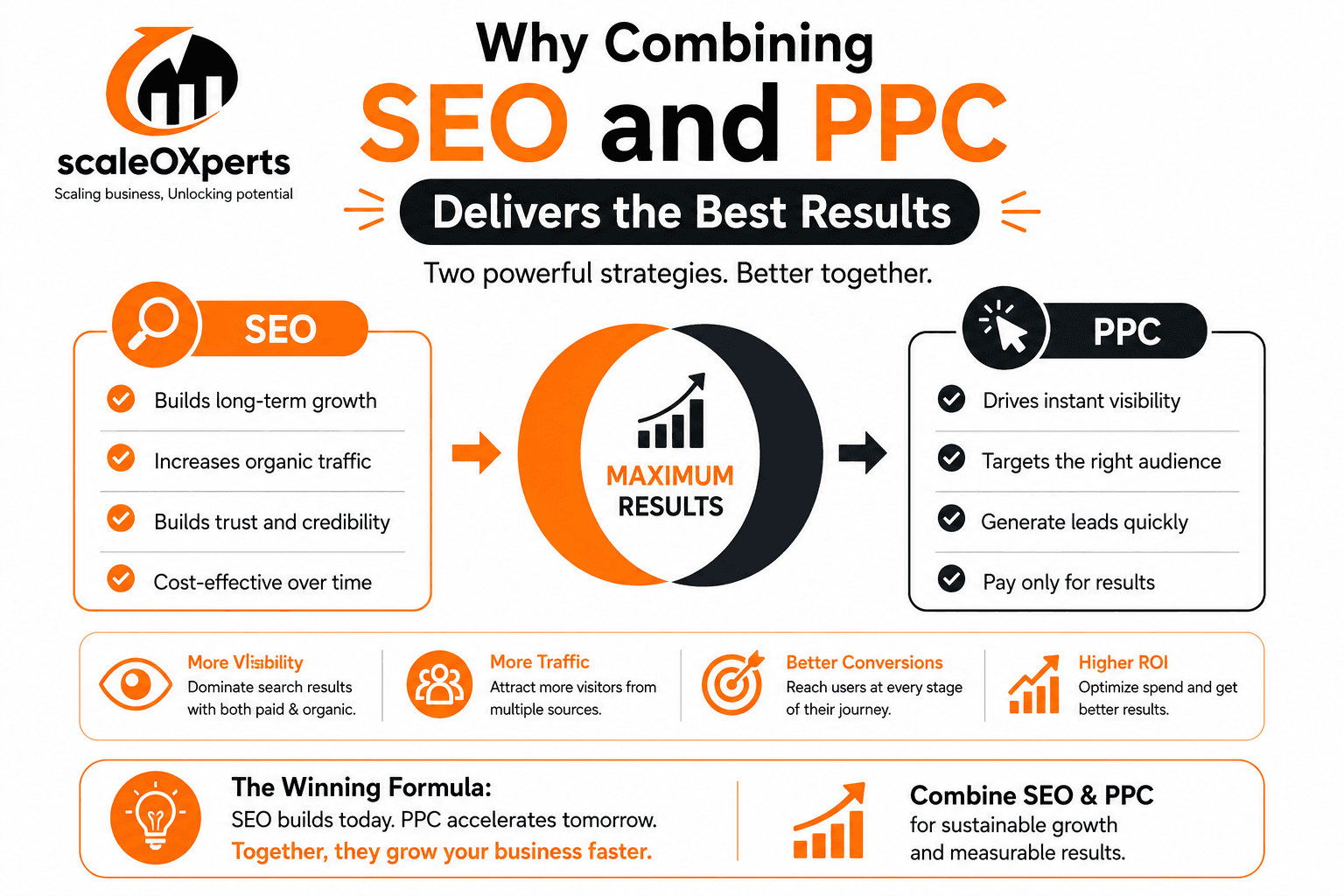
The most successful businesses rarely choose between SEO and Google Ads—they combine them.
Running SEO alongside PPC provides several advantages:
- Immediate traffic from ads
- Long-term organic growth
- Better keyword data
- Increased brand visibility
- Higher overall search engine presence
Research shows that many businesses intentionally advertise on keywords where they already rank organically to maximize visibility and capture additional clicks.
A practical strategy looks like this:
Launch Google Ads for immediate leads.
Build SEO content around the same high-performing keywords.
Gradually reduce dependence on paid traffic as organic rankings improve.
Continue using PPC for promotions, remarketing, and highly competitive keywords.
This balanced approach provides both short-term revenue and sustainable long-term growth.
Conclusion
SEO vs Google Ads: There’s no definitive winner because no two businesses have the same goals, budgets, or timelines.
For businesses looking for instant visibility and quick lead generation, PPC services will get them results faster than any other channel.
If you’re more concerned with long-term authority building, decreasing customer acquisition costs, and building a sustainable source of organic traffic, SEO provides an unmatched level of value over time.
However, for the vast majority of businesses, a combination of both PPC vs SEO is likely to provide the best approach.
Paid search provides the short-term benefits that SEO takes months, if not years, to build. SEO, on the other hand, provides a long-term, ongoing traffic asset that will continue to benefit your business long after campaigns end.
Frequently Asked Questions
1. Which is better: SEO or Google Ads?
Neither is universally better. SEO is ideal for long-term growth, while Google Ads provides immediate traffic and faster lead generation.
2. Is SEO cheaper than PPC?
In the long run, yes. SEO requires upfront investment but doesn't charge for every click, making it more cost-effective over time.
3. Can small businesses use both SEO and Google Ads?
Absolutely. Many small businesses use Google Ads for immediate visibility while building SEO for sustainable organic traffic.
4. How long does SEO take to show results?
Most websites begin seeing noticeable improvements within 3–6 months, although highly competitive industries may take longer.
5. Should I stop Google Ads after my SEO rankings improve?
Not necessarily. Many businesses continue running Google Ads for competitive keywords, promotions, remarketing, and increased search visibility alongside strong organic rankings.